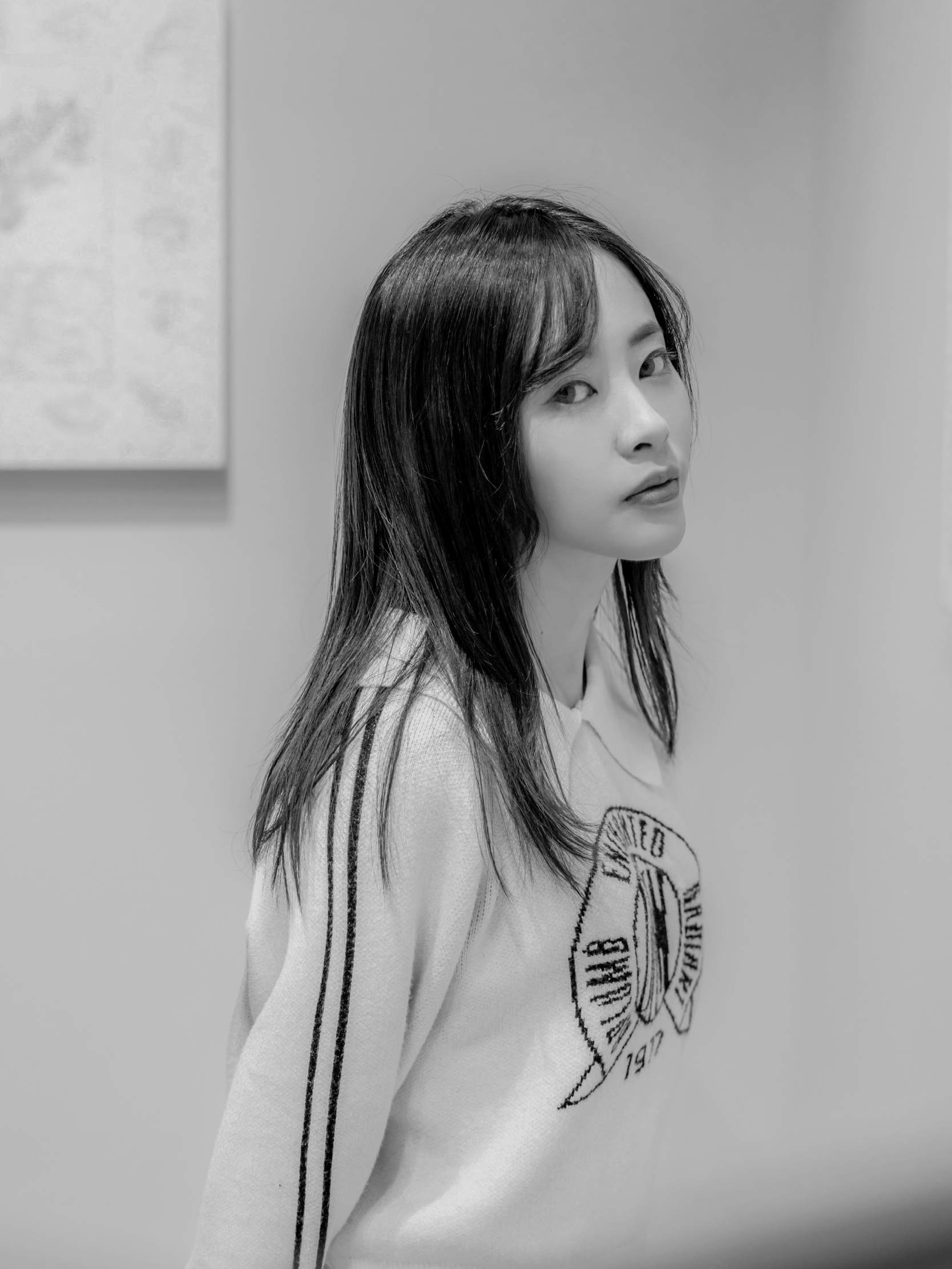
失敗的戀愛:藝術家創作自述
文|翁榛羚
此次展覽以「失敗的戀愛」為題,源自於我從大學至今的感情經驗。那些曾經轟轟烈烈、渴望每分每秒都黏在一起的戀愛,彷彿都受到某種無形的魔咒牽引,幾乎在三個月左右便開始瓦解。有些因價值觀的衝突而結束,有些則因背叛而破裂。初戀時遭遇劈腿的經驗,也深深改變了我理解愛情的方式,使我逐漸將感情視為尋求安全感的出口,而非彼此平等的付出。我一直不相信所謂的一見鍾情,但回頭看,每一段戀情幾乎都是在見到對方的第一面後,便無法停止思念。這樣的情感來得迅速而強烈,也讓我一次次投入關係。然而在愛情之中,我卻從未真正學會愛自己。我總像一塊柔軟的泥土,不斷迎合對方、改變自己,希望成為對方期待的模樣。直到一段關係結束,才發現那塊泥土早已被反覆揉捏得面目全非,也失去了原本的形狀。因此,我開始思考,「失敗」究竟代表什麼?失敗,是一段戀情的結束?是分手後躲在床上痛哭?是反覆翻看曾經幸福的照片而無法自拔?還是,在一段關係中逐漸失去自己,才是真正的失敗?
2024年的個展「換體」中,我以宋代蘇漢臣〈嬰戲圖〉為主要視覺來源,將自身日常所觀察到的非日常物件置入其中,以童戲作為觀看成人世界的媒介。而在「失敗的戀愛」中,我延續〈嬰戲圖〉的多人物敘事形式,但將焦點轉向自身的情感經驗,使作品從觀看外部世界,逐漸回到對自身生命經驗的剖析。
碩士期間,為了前往日本留學,我曾到台北車站附近的日文補習班學習日語。當時的我,因為過去的戀愛創傷,已經決定暫時不再投入任何感情,只希望專心提升自己。然而,最後一堂課結束後,一位女同學送給我一顆彩虹糖,害羞地詢問是否能交換Instagram。之後,我們慢慢開始聊天。農曆新年期間,因為彼此都留在台北,初一晚上相約見面。那天昏暗的燈光下,我看見她泛紅的耳朵,她從口袋裡拿出一枚童年常見的糖果戒指,輕聲問我:「可以和我交往嗎?」
這段經歷,也讓我重新開始關注女性。
其實,最早對女性產生特殊情感,是在國中時期,只是當時誤以為那只是彼此對漫畫的共同興趣。直到多年後,我才重新回望那些經驗,也開始思考自己的性向、身體認知,以及性別認同。對我而言,性別並不是絕對二元的存在,而更像是一道持續流動的光譜。
這樣的思考,也逐漸影響我的創作。
我作品中反覆出現的「光頭裸女」,其實是最早誕生的自我象徵。最初,我只是想描繪一具畸形、陌生的身體,但當筆尖落下時,下體卻自然地形成了女性的性徵。這個不經意的選擇,反而成為我日後持續探討身體、性別與自我認同的重要起點。因此,在本次展覽中,畫面開始出現男性與女性身體的互動、性徵的交錯,以及情慾的流動。我並不試圖提供一個關於性別的明確答案,而是希望呈現身體如何在情感、慾望與身份之間持續變形。2024年9月至2026年2月,我於日本各地駐村創作。除了碩士論文研究葛飾北齋《漫畫》中肌肉線條的描繪方式之外,我也長期閱讀日本文學,其中三島由紀夫《金閣寺》與芥川龍之介《地獄變》對我的影響尤深。
《地獄變》中對於人性的殘酷凝視,以及角色面對極端情境時所展現的執著,使我重新思考藝術、慾望與毀滅之間的關係。作品中那種對人性的好奇、對生命荒謬性的凝視,以及介於厭世與幽默之間的矛盾情緒,也逐漸成為我創作中黑色幽默的重要來源。駐村期間,我走訪日本各地美術館,其中最吸引我的,是江戶時代的春畫。尤其是喜多川歌麿作品中所強調的「眼差し」(まなざし),意指人物透過眼神、目光所流露出的情緒與心理狀態。歌麿筆下人物之間微妙的凝視,使性愛不只是肉體的結合,更成為情感交流的重要語言。然而,我將這種「眼差し」轉化成另一種觀看方式。在我的作品裡,人物大多呈現呆滯、近乎面無表情的神態,即使正在發生親密行為,也失去了情感交流。我試圖反映當代親密關係逐漸速食化的現象。相較於性愛本身,我反而認為事後的一段談話,往往比身體接觸更能抵達彼此內心。江戶春畫刻意誇大性器官的比例,使畫面產生一種失衡卻無法忽視的視覺效果。而若能閱讀其中草書所寫的文字,內容往往並非色情,而是鄰里八卦、市井流言,甚至是居酒屋老闆與遊女之間的情愛故事,使觀看者在情慾與日常之間來回遊走。
另一方面,我也參考了日本無慘繪以及漫畫家丸尾末廣的作品。在漫畫中,除了圖像本身,呻吟、尖叫與情緒皆透過大量擬聲文字共同構成敘事。因此,本次展覽畫面中也大量加入「哈!」「呵!」「嘿嘿!」等擬聲詞,讓文字不只是閱讀的媒介,而成為畫面本身的一部分。有些文字遮蔽性器,有些則穿插於人物交歡之間,藉由文字介入圖像,使觀看者在閱讀與觀看之間產生新的節奏,也讓畫面的張力更加強烈。
此外,本次展覽將反覆出現兩個文字——「吉」與「愛」。
它們象徵祝福、吉祥與幸福,卻被放置於充滿獵奇、荒謬、慾望與黑色幽默的畫面之中。我刻意讓兩者形成巨大的反差,使「祝福」與「異樣」同時存在。當觀者置身其中時,或許會開始思考:究竟什麼才是真正的幸福?什麼又是真正的愛?《失敗的戀愛》並不是一場對逝去感情的哀悼,而是一場關於親密關係、身體、性別認同與觀看方式的探索。那些曾經令我受傷的經驗,最終轉化為創作的養分;而那些被稱作「失敗」的時刻,也成為重新理解自我與他人的開始。透過作品,我希望將極為私密的生命經驗轉化為共同的觀看經驗,使每位觀者都能在其中,看見自己曾經愛過、失去過,以及仍然持續尋找的模樣。
另一方面,本次展覽也延續我近年持續關注的「台女文化」。「台女」原本只是「台灣女性」的簡稱,但近年在PTT、Dcard等臺灣網路論壇中,逐漸演變為具有貶抑意味的標籤,常被部分群體用來形容特定女性具有公主病、物質主義、情感關係中要求特權,或以「女權自助餐」等詞彙加以批評。這些帶有情緒性的網路語言,反映的不只是對女性的評價,更折射出當代網路社會中日益尖銳的性別對立,以及不同性別對於權利、責任與親密關係的想像差異。然而,當我閱讀《台女 Tai-Niu》一書後,卻看見另一種完全不同的女性樣貌。書中收錄不同世代、不同背景女性的生命故事,她們勇敢面對自身處境,追求經濟獨立,忠於自我選擇,並試圖突破社會長期賦予女性的角色框架。相較於網路文化中被簡化的「台女」形象,這本書重新賦予了「台女」更多元且複雜的意義,也讓我開始思考,究竟女性是如何被社會觀看,又如何透過自身行動重新定義自己。
這樣的思考,也讓我聯想到江戶時代女性的處境。江戶時代的女性同樣生活在嚴格的父權社會之中,無論是武家女性、町人女性或遊女,都受到不同程度的身分規範與道德束縛。然而,在春畫之中,女性卻並非始終只是被觀看的客體。以喜多川歌麿為代表的春畫作品,透過人物之間細膩的「眼差し(まなざし)」描繪,使女性展現出慾望、情感與主體性,她們並非單純被男性凝視,而是在彼此凝視之間形成一種平等且曖昧的情感交流。因此,我試圖將「台女文化」與江戶女性放在同一條歷史脈絡中觀看。雖然兩者相隔數百年,也處於完全不同的社會背景,但她們都共同面臨著一件事情──「女性始終不斷被社會定義、命名與觀看」。從江戶時代對女性貞節、身份與性別角色的規範,到今日網路文化中以「台女」作為簡化女性形象的標籤,都顯示女性的身體、情感與生活方式,持續受到外界話語的建構。
因此,在本次作品中,我並非想回答「什麼才是台女」,而是試圖透過江戶春畫、多人物敘事與當代網路文化彼此交錯,重新討論女性如何成為被觀看的對象,又如何重新奪回觀看自身的權力。
———
Artist Statement for Failed Romances
by Weng Jhen-Ling
The title of this exhibition, Failed Romances, comes from my experiences with love since university. My relationships often began with great intensity. We wanted to spend every moment together, yet it was as if some invisible spell took hold. Around the three month mark, things would begin to fall apart. Some relationships ended because our values clashed. Others ended in betrayal. When my first partner was unfaithful, it changed the way I understood love. I began to seek safety in relationships instead of seeing love as something two people give equally.
I have never believed in love at first sight. Looking back, though, I realize that in almost every relationship, I could not stop thinking about the other person from the moment we met. My feelings came quickly and strongly, and I gave myself to each relationship. But I never truly learned to love myself. I was like a piece of soft clay, always adjusting to the other person and reshaping myself into what I thought they wanted. Only when a relationship ended did I see how thoroughly that clay had been worked, until it no longer resembled its original shape. I began to wonder what “failure” really means. Is it the end of a relationship? Crying in bed after a breakup? Looking again and again at photographs of happier times? Or is the real failure losing yourself while you are still with someone?
In my 2024 solo exhibition Variation, I drew mainly on Children at Play (嬰戲圖)by the Song dynasty painter Su Hanchen (蘇漢臣). I placed strange objects from my everyday observations into its scenes and used children’s play as a way to look at the adult world. In Failed Romances, I continue its form of storytelling through many figures, but turn toward my own emotional experiences. The work moves from observing the world around me to examining my own life.
During my master’s studies, I took Japanese classes near Taipei Main Station to prepare for studying in Japan. After being hurt in past relationships, I had decided to stay out of love for a while and focus on myself. But after our last class, a female classmate gave me a rainbow candy and shyly asked if we could exchange Instagram accounts. We gradually began to talk. During the Lunar New Year, we were both staying in Taipei, so we arranged to meet on the evening of the first day. In the dim light, I noticed that her ears had turned red. She took a candy ring, the kind I remembered from childhood, out of her pocket and softly asked, “Will you go out with me?”
That experience led me to think about my feelings for women again.
I had first felt something special for a girl in junior high school, though at the time I mistook it for our shared interest in manga. Years later, I began to revisit those memories and think about my sexuality, my sense of my body, and my gender identity. To me, gender is not a fixed binary. It feels more like a spectrum that is always shifting.
These questions gradually entered my work. The bald, nude woman who appears again and again in my paintings was my first symbol for myself. At first, I simply wanted to draw a body that looked unfamiliar and distorted. Yet as I drew, female sexual features took shape almost on their own. That unplanned choice became the starting point for my continuing exploration of the body, gender, and identity. In this exhibition, male and female bodies begin to interact. Their sexual features cross, and desire moves between them. I am not trying to give a clear answer about gender. I want to show how bodies keep changing through feeling, desire, and identity.
From September 2024 to February 2026, I worked at artist residencies across Japan. Alongside my master’s research on the way Katsushika Hokusai (葛飾北斎) drew muscles in his Manga (北斎漫画), I spent a great deal of time reading Japanese literature. Yukio Mishima’s (三島由紀夫) The Temple of the Golden Pavilion (金閣寺) and Ryūnosuke Akutagawa’s (芥川龍之介) Hell Screen (地獄変) had a particularly strong influence on me.
The stark view of human cruelty in Hell Screen, and the characters’ fierce devotion when faced with extreme circumstances, made me reconsider the ties between art, desire, and destruction. Its curiosity about human nature, its attention to the absurdity of life, and its uneasy mix of despair and humor also fed the dark humor in my work.
During my residencies, I visited museums throughout Japan. I was especially drawn to shunga (春画), the erotic prints of the Edo period. In particular, I was interested in the manazashi (眼差し), or gaze, in the work of Kitagawa Utamaro (喜多川歌麿). The subtle looks exchanged by his figures reveal their feelings and states of mind. Sex becomes more than physical contact. It becomes a language for emotional exchange.
I transform that gaze in my own work. My figures often stare blankly, almost without expression. Even when they are intimate, they seem unable to connect emotionally. I want to reflect the way intimacy today can become hurried and disposable. I often feel that a conversation afterward can bring two people closer than physical contact itself. Edo period shunga exaggerates the size of sexual organs, creating images that feel out of balance but are impossible to ignore. Yet the cursive writing within these prints is often not erotic. It may tell of neighborhood gossip, street rumors, or a love affair between a tavern owner and a courtesan. The viewer moves back and forth between desire and ordinary life.
I also looked at Japanese muzan e (無惨絵), prints depicting scenes of violence, and the work of manga artist Suehiro Maruo (丸尾末広). In manga, images do not tell the story alone. Sounds, cries, and emotions also appear as written words. For this exhibition, I have filled my images with expressions such as “Ha!”, “Huh!”, and “Heh heh!” Words become part of the image rather than simply something to read. Some cover sexual organs. Others appear between figures having sex. As text enters the scene, the viewer finds a new rhythm between reading and looking, and the tension in the image grows.
Two characters also recur throughout the exhibition: “吉” and “愛”, meaning good fortune and love. They suggest blessings and happiness, yet I place them in scenes filled with strange details, absurdity, desire, and dark humor. I want that sharp contrast to let blessing and unease exist together. Perhaps viewers will begin to ask what happiness really is, and what love really means.
Failed Romances is not a mourning of relationships that have ended. It is an exploration of intimacy, the body, gender identity, and the ways we look at one another. The experiences that once hurt me have become material for my work. The moments called “failures” have also become the beginning of a new understanding of myself and others. Through these works, I hope to turn deeply private experiences into something we can look at together, so that viewers might recognize something of how they have loved, what they have lost, and what they are still searching for.
This exhibition also continues my recent interest in Tai Niu (台女, Taiwanese women). The term began as a simple abbreviation, but in recent years it has become a dismissive label on Taiwanese online forums such as PTT and Dcard. Some people use it to portray women as spoiled or materialistic, as demanding special treatment in relationships, or as choosing only the parts of feminism that benefit them. This charged language tells us more than how women are judged. It also reveals growing conflict over gender online, and different ideas about rights, responsibilities, and intimate relationships.
Reading the book Tai Niu (《台女》), however, showed me a very different picture. It brings together the life stories of women from different generations and backgrounds. They face their circumstances with courage, seek financial independence, stay true to their choices, and try to move beyond the roles society has long assigned them. Compared with the flattened image of Tai Niu online, the book gives the term a richer and more complex meaning. It made me ask how society looks at women, and how women redefine themselves through their own actions.
These thoughts also led me to the lives of women in the Edo period. Women then lived within a strict patriarchal society. Women from samurai families, townspeople, and courtesans all faced rules about their status and conduct, though in different ways. In shunga, however, women are not always simply objects to be looked at. In works such as Utamaro’s, the careful exchange of gazes allows women to show desire, feeling, and a sense of self. They are not only seen by men. Through looking at one another, the figures form an emotional exchange that feels both mutual and uncertain.
I want to consider Tai Niu culture and Edo period women along the same line of thought. Centuries and very different societies separate them, yet women in both settings are continually defined, named, and looked at by others. From Edo period rules about chastity, status, and gender roles to today’s use of Tai Niu as a label that reduces women to a type, outside voices continue to shape ideas about women’s bodies, feelings, and ways of living.
In these works, I am not trying to answer the question “What is a Tai Niu?” By bringing together Edo period shunga, scenes with many figures, and contemporary internet culture, I want to ask how women become objects of others’ attention, and how they might reclaim the power to look at themselves.