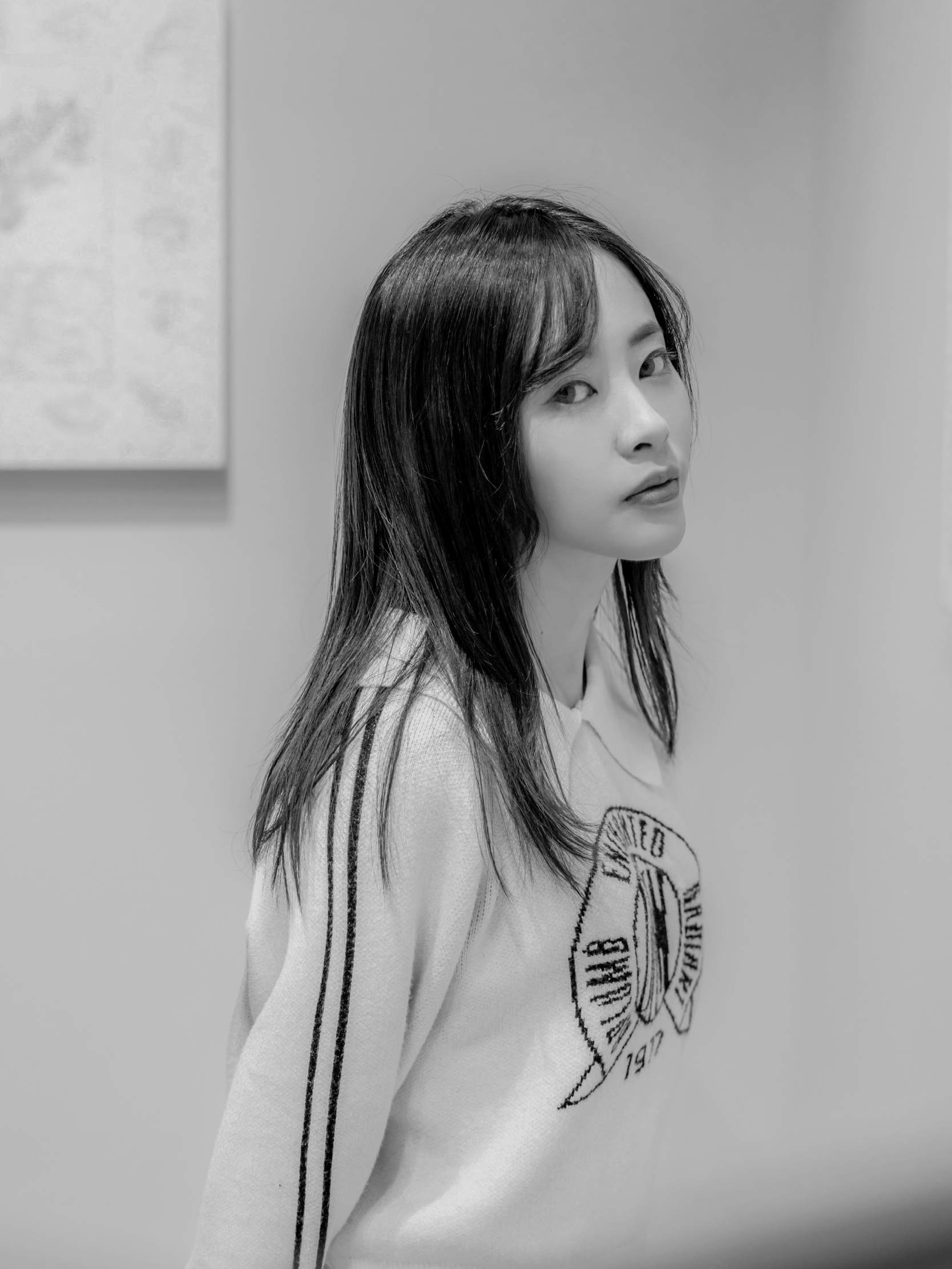
Artist Statement for Failed Romances
by Weng Jhen-Ling
The title of this exhibition, Failed Romances, comes from my experiences with love since university. My relationships often began with great intensity. We wanted to spend every moment together, yet it was as if some invisible spell took hold. Around the three month mark, things would begin to fall apart. Some relationships ended because our values clashed. Others ended in betrayal. When my first partner was unfaithful, it changed the way I understood love. I began to seek safety in relationships instead of seeing love as something two people give equally.
I have never believed in love at first sight. Looking back, though, I realize that in almost every relationship, I could not stop thinking about the other person from the moment we met. My feelings came quickly and strongly, and I gave myself to each relationship. But I never truly learned to love myself. I was like a piece of soft clay, always adjusting to the other person and reshaping myself into what I thought they wanted. Only when a relationship ended did I see how thoroughly that clay had been worked, until it no longer resembled its original shape. I began to wonder what “failure” really means. Is it the end of a relationship? Crying in bed after a breakup? Looking again and again at photographs of happier times? Or is the real failure losing yourself while you are still with someone?
In my 2024 solo exhibition Variation, I drew mainly on Children at Play (嬰戲圖)by the Song dynasty painter Su Hanchen (蘇漢臣). I placed strange objects from my everyday observations into its scenes and used children’s play as a way to look at the adult world. In Failed Romances, I continue its form of storytelling through many figures, but turn toward my own emotional experiences. The work moves from observing the world around me to examining my own life.
During my master’s studies, I took Japanese classes near Taipei Main Station to prepare for studying in Japan. After being hurt in past relationships, I had decided to stay out of love for a while and focus on myself. But after our last class, a female classmate gave me a rainbow candy and shyly asked if we could exchange Instagram accounts. We gradually began to talk. During the Lunar New Year, we were both staying in Taipei, so we arranged to meet on the evening of the first day. In the dim light, I noticed that her ears had turned red. She took a candy ring, the kind I remembered from childhood, out of her pocket and softly asked, “Will you go out with me?”
That experience led me to think about my feelings for women again.
I had first felt something special for a girl in junior high school, though at the time I mistook it for our shared interest in manga. Years later, I began to revisit those memories and think about my sexuality, my sense of my body, and my gender identity. To me, gender is not a fixed binary. It feels more like a spectrum that is always shifting.
These questions gradually entered my work. The bald, nude woman who appears again and again in my paintings was my first symbol for myself. At first, I simply wanted to draw a body that looked unfamiliar and distorted. Yet as I drew, female sexual features took shape almost on their own. That unplanned choice became the starting point for my continuing exploration of the body, gender, and identity. In this exhibition, male and female bodies begin to interact. Their sexual features cross, and desire moves between them. I am not trying to give a clear answer about gender. I want to show how bodies keep changing through feeling, desire, and identity.
From September 2024 to February 2026, I worked at artist residencies across Japan. Alongside my master’s research on the way Katsushika Hokusai (葛飾北斎) drew muscles in his Manga (北斎漫画), I spent a great deal of time reading Japanese literature. Yukio Mishima’s (三島由紀夫) The Temple of the Golden Pavilion (金閣寺) and Ryūnosuke Akutagawa’s (芥川龍之介) Hell Screen (地獄変) had a particularly strong influence on me.
The stark view of human cruelty in Hell Screen, and the characters’ fierce devotion when faced with extreme circumstances, made me reconsider the ties between art, desire, and destruction. Its curiosity about human nature, its attention to the absurdity of life, and its uneasy mix of despair and humor also fed the dark humor in my work.
During my residencies, I visited museums throughout Japan. I was especially drawn to shunga (春画), the erotic prints of the Edo period. In particular, I was interested in the manazashi (眼差し), or gaze, in the work of Kitagawa Utamaro (喜多川歌麿). The subtle looks exchanged by his figures reveal their feelings and states of mind. Sex becomes more than physical contact. It becomes a language for emotional exchange.
I transform that gaze in my own work. My figures often stare blankly, almost without expression. Even when they are intimate, they seem unable to connect emotionally. I want to reflect the way intimacy today can become hurried and disposable. I often feel that a conversation afterward can bring two people closer than physical contact itself. Edo period shunga exaggerates the size of sexual organs, creating images that feel out of balance but are impossible to ignore. Yet the cursive writing within these prints is often not erotic. It may tell of neighborhood gossip, street rumors, or a love affair between a tavern owner and a courtesan. The viewer moves back and forth between desire and ordinary life.
I also looked at Japanese muzan e (無惨絵), prints depicting scenes of violence, and the work of manga artist Suehiro Maruo (丸尾末広). In manga, images do not tell the story alone. Sounds, cries, and emotions also appear as written words. For this exhibition, I have filled my images with expressions such as “Ha!”, “Huh!”, and “Heh heh!” Words become part of the image rather than simply something to read. Some cover sexual organs. Others appear between figures having sex. As text enters the scene, the viewer finds a new rhythm between reading and looking, and the tension in the image grows.
Two characters also recur throughout the exhibition: “吉” and “愛”, meaning good fortune and love. They suggest blessings and happiness, yet I place them in scenes filled with strange details, absurdity, desire, and dark humor. I want that sharp contrast to let blessing and unease exist together. Perhaps viewers will begin to ask what happiness really is, and what love really means.
Failed Romances is not a mourning of relationships that have ended. It is an exploration of intimacy, the body, gender identity, and the ways we look at one another. The experiences that once hurt me have become material for my work. The moments called “failures” have also become the beginning of a new understanding of myself and others. Through these works, I hope to turn deeply private experiences into something we can look at together, so that viewers might recognize something of how they have loved, what they have lost, and what they are still searching for.
This exhibition also continues my recent interest in Tai Niu (台女, Taiwanese women). The term began as a simple abbreviation, but in recent years it has become a dismissive label on Taiwanese online forums such as PTT and Dcard. Some people use it to portray women as spoiled or materialistic, as demanding special treatment in relationships, or as choosing only the parts of feminism that benefit them. This charged language tells us more than how women are judged. It also reveals growing conflict over gender online, and different ideas about rights, responsibilities, and intimate relationships.
Reading the book Tai Niu (《台女》), however, showed me a very different picture. It brings together the life stories of women from different generations and backgrounds. They face their circumstances with courage, seek financial independence, stay true to their choices, and try to move beyond the roles society has long assigned them. Compared with the flattened image of Tai Niu online, the book gives the term a richer and more complex meaning. It made me ask how society looks at women, and how women redefine themselves through their own actions.
These thoughts also led me to the lives of women in the Edo period. Women then lived within a strict patriarchal society. Women from samurai families, townspeople, and courtesans all faced rules about their status and conduct, though in different ways. In shunga, however, women are not always simply objects to be looked at. In works such as Utamaro’s, the careful exchange of gazes allows women to show desire, feeling, and a sense of self. They are not only seen by men. Through looking at one another, the figures form an emotional exchange that feels both mutual and uncertain.
I want to consider Tai Niu culture and Edo period women along the same line of thought. Centuries and very different societies separate them, yet women in both settings are continually defined, named, and looked at by others. From Edo period rules about chastity, status, and gender roles to today’s use of Tai Niu as a label that reduces women to a type, outside voices continue to shape ideas about women’s bodies, feelings, and ways of living.
In these works, I am not trying to answer the question “What is a Tai Niu?” By bringing together Edo period shunga, scenes with many figures, and contemporary internet culture, I want to ask how women become objects of others’ attention, and how they might reclaim the power to look at themselves.