乘化遊 —— 余承堯
文|異雲書屋
余承堯(1898–1993)在 56 歲那年提起畫筆。他雖未步入學院體制,卻深具古典文人的精神滋養,前半生對詩歌的吟詠、書法的臨摹以及南管音樂的癡迷,早已在他體內建構出一套深厚的文人美學與內在節奏。
繼 2025 年「群峰挺秀——余承堯 藝術展」以純水墨繪畫展示其創作骨幹後,異雲書屋今年特別策劃「乘化遊——余承堯」,試圖將其置於縱深的中國書畫史脈絡,並與西方現代主義的藝術概念深度對話。我們赫然發現,余承堯在二戰後西方現代藝術蓬勃發展的局勢中,獨自開闢的藝術風格,不但徹底打破了傳統筆墨的既定格套,其內在邏輯更精準對應了現代主義對「主觀經驗」的追求以及對「形式結構」自主性的要求。由此可知,余承堯藝術創作的本質,正是東方山水主體性在邁向現代主義的進程中,最為直接且震撼的回答。
■ 記憶的地景
中國藝術史學家高居翰(James Cahill, 1926-2014)的經典著作《隔江山色:元代繪畫(1279-1368)》中,指出14世紀的元代文人繪畫被賦予了極高的主體性,並強調當時作品中所折射的「遺民心境」。前半生在戰火與軍旅生涯中顛沛流徙、後渡海寓臺的余承堯,其身份上的移民處境與懸置感,促使他筆下的崇山峻嶺,轉化為對故鄉永春山川的追憶,以及他早年踏遍大江南北所留下的「記憶的地景」。
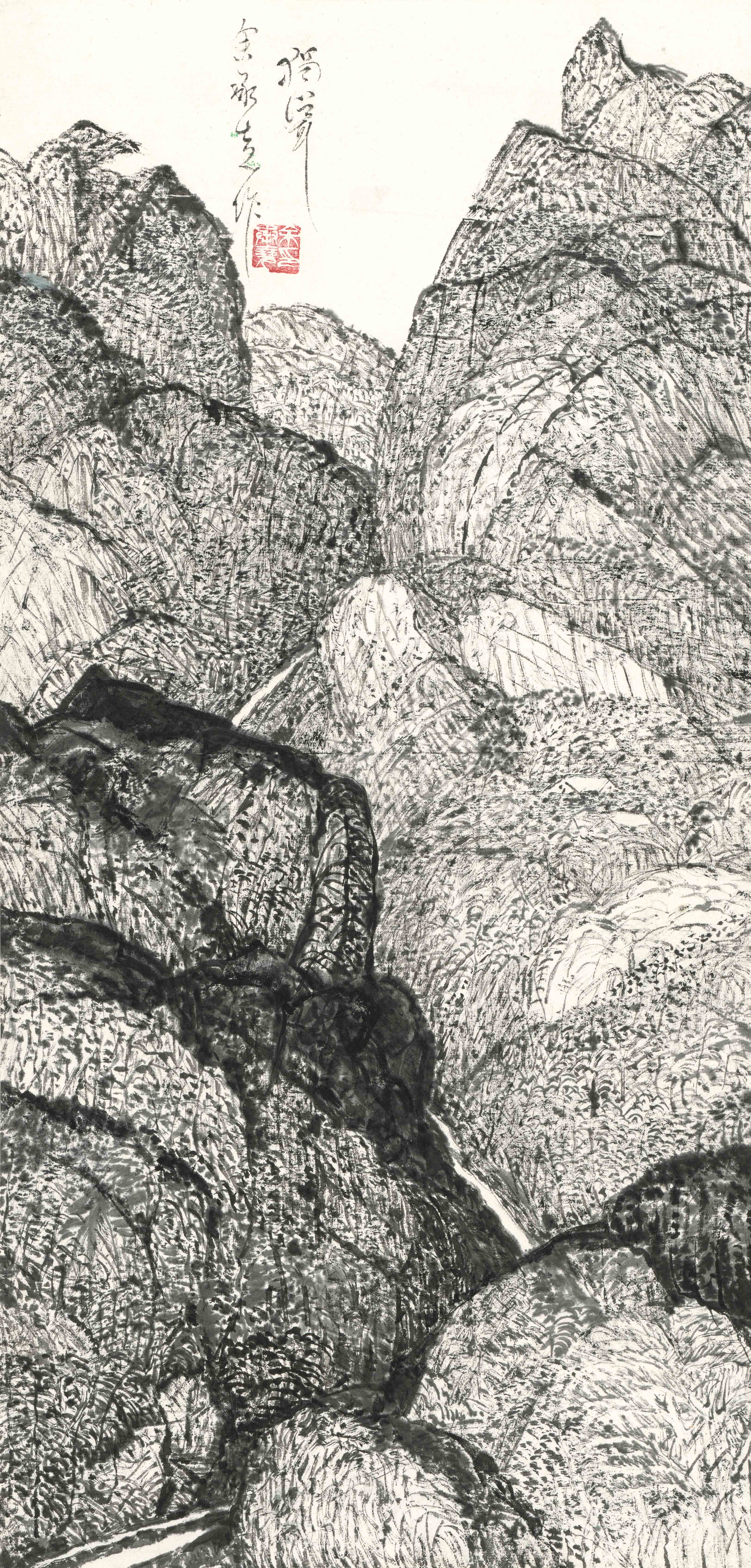
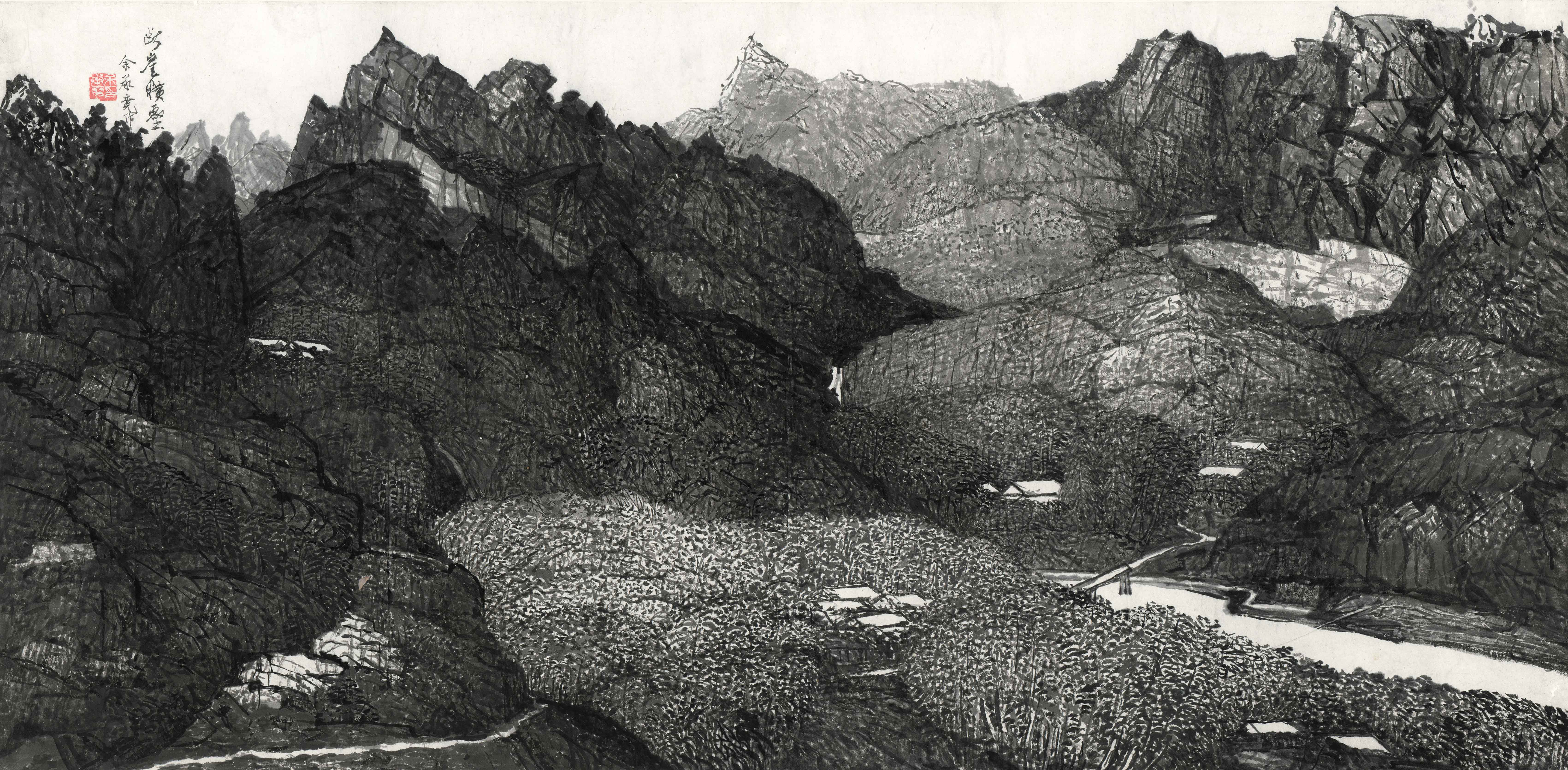
然而,有別於元代倪瓚式的留白、冷寂疏離的文人畫風,余承堯面對歷史創傷與流徙經驗的視覺回應,是以滿幅密不透風的群山地景呈現。在此次展覽中,那些幾乎沒有喘息空間、以重重疊疊的密點細線與「亂筆」構成的山石結構,正是個體面對時代巨變、身份認同受到擠壓時的遁逃與喘息空間,從內心出發描繪出記憶中的故山,在歷史廢墟與鄉愁上,以主觀意志重新構築出一座座精神的避難所。
■ 現代主義純粹性的體現
從現代主義的發展脈絡來看,20 世紀中葉的台灣畫壇正身處傳統與西化的拉鋸戰,當同時代的藝術家試圖藉由模仿西方抽象表現主義來尋求水墨的現代化時,余承堯卻以一種極其純粹、直覺的姿態,在體制之外與時代「直球對決」,余承堯的橫空出世,代表了一種極其罕見的「原生型現代主義」(Endogenous Modernism)。
這場直面核心的對決,展現了藝術家如何將生命徹底放入「乘化以遊」(出自《莊子》)的狀態:余承堯後半生藉由「聽南管」與「畫家鄉」寄託心靈,他的繪畫不為迎合體制、不宗法古人,那些密密麻麻、重疊附加、帶有方向性的細線與密點,在視覺上造成的並非靜止的畫面,而是一種不斷流動、綿延不絕的聽覺性韻律(Time-based Rhythm);現代主義的核心精神在於「形式自律」與「主觀經驗的覺醒」,余承堯摒棄了傳統皴法再現自然的古典法則,將作畫視為純粹精神世界的真實反映,這種將繪畫視為純粹心靈媒介的態度,讓他直接繞過了水墨現代化所面臨的理論困境,以最直覺的姿態抵達了現代主義的純粹境界。
■ 亂筆幾何
高居翰在《隔江山色》中曾指出元代畫家將筆墨從客觀物象中解放、賦予其獨立審美價值的「形式主義革命」。而余承堯的偉大與超前之處,在於他「不知法,故不受法縛」,直接越過了明清以來僵化的文人畫譜體制,成為傳統水墨走向現代主義進程中,最關鍵且不可或缺的一塊國際拼圖,他是最早一批跨越文化藩籬、被國際藝壇(如紐約、法國)看見其現代性的東方水墨大師之一。
這種現代性精神的核心,最終凝聚在畫面中「亂筆的幾何」。余承堯獨創的「亂筆」——那種細碎、綿密、近乎偏執的密點細線,在其畫中轉化為純粹的線條堆疊與色塊擠壓,營造出傳統水墨罕見的體積感與抽象幾何結構。當我們微觀其畫面,這些亂筆不再是石頭或樹木的物理質地,而是純粹的抽象線條。這種幾近直覺的幾何解構,與保羅·塞尚(Paul Cézanne)對物質幾何結構的追求產生了跨時空的現代主義共鳴。余承堯徹底解決了傳統筆墨在現代視覺語彙中的轉型問題,將筆墨的獨立性推向極致,完成了東方藝術足以與全球戰後現代主義平起平坐的、挺拔不群的崇高之山。
■ 時代的召喚
當國際藝壇與當代藝術市場正重新翻檢全球戰後現代主義(Global Post-war Modernism)與在地主體性的當代意義時,重觀余承堯比以往任何時刻都更具啟發性。「乘化遊——余承堯」不只是一場懷舊的回顧,更是一場對當代繪畫的回應與視覺的重構,余承堯以其一生不落體制、不入俗套的「乘化」姿態,示範了何謂藝術最本真、不落俗套的主體自由;在當今全球文化邊界日益模糊、個體再次面臨焦慮與流徙的時代,余承堯筆下那些密實疊合的碧色群山,不僅為當代人提供了安頓身心的避難所,更向世界證明:東方的現代性無須外求,只需回歸生命最純粹的直覺,便能在萬水千山之外,自成一座無可撼動的崇高孤峰。
———
Roaming with Transformation : Yu Cheng-Yao
by YIYUN ART
Yu Cheng-Yao (1898–1993) first took up painting at the age of fifty-six. Although he never received formal academic training in art, he was deeply shaped by the intellectual and aesthetic traditions of the classical Chinese literati. During the first half of his life, his devotion to poetry, calligraphy, and Nanguan music had already cultivated a profound aesthetic sensibility and inner rhythm that would later become fundamental to his art.
Following Graceful Peaks Rise: The Art of Yu Cheng-Yao in 2025, which presented the foundations of Yu’s practice through works in ink, YIYUN ART presents Roaming with Transformation: Yu Cheng-Yao. The exhibition places his work within the broader history of Chinese painting and calligraphy while bringing it into dialogue with key ideas of Western modernism.
Seen from this perspective, the highly individual style Yu developed during the flourishing of postwar modern art in the West not only broke decisively with established conventions of brush and ink, but also reveals an internal logic closely aligned with modernism’s emphasis on subjective experience and the autonomy of form. Yu’s art can therefore be understood as one of the most direct and compelling responses to the question of how the subjectivity of Chinese landscape painting entered the modern age.
Landscapes of Memory
In his influential study Hills Beyond a River: Chinese Painting of the Yüan Dynasty, 1279 to 1368, art historian James Cahill (1926–2014) identifies a heightened sense of subjectivity in fourteenth century Yuan literati painting, particularly in works shaped by the psychological experience of loyalist scholars living through political upheaval.
Yu Cheng-Yao spent the first half of his life moving through war and military service before eventually crossing the sea and settling in Taiwan. His experience of migration, displacement, and a life suspended between places transformed the towering mountains in his paintings into recollections of the landscape of his native Yongchun, as well as “landscapes of memory” formed by the many regions he had encountered during his earlier travels across China.
Yet Yu’s visual response to historical trauma and displacement differs sharply from the sparse, cool, and solitary landscapes associated with the Yuan painter Ni Zan. Yu filled his compositions with densely packed ranges of mountains, leaving almost no open space. Layers of fine lines, concentrated dots, and what Yu called luanbi (“unruly brushwork”) accumulate into tightly constructed rock formations.
These densely layered landscapes may be understood as spaces of retreat created in response to profound historical change and the pressures of displaced identity. Drawing from within, Yu reconstructed the mountains of memory as psychological landscapes. From the ruins of history and the longing for home, he used his own vision to build one spiritual refuge after another.
The Purity of Modernism
Within the broader history of modernism, Taiwan’s art world in the mid twentieth century was caught between inherited traditions and the growing influence of Western art. While many artists of Yu’s generation sought to modernize ink painting through encounters with Western Abstract Expressionism, Yu followed a radically different path.
Working outside institutional structures, he approached painting with remarkable directness and intuition. His emergence represents a rare form of what may be described as endogenous modernism, a modernism that developed from within his own cultural experience and personal life rather than through the adoption of an external artistic model.
At the heart of this approach was Yu’s way of placing his life within the state described in the Zhuangzi as “roaming with transformation.” During the second half of his life, listening to Nanguan music and painting the landscapes of his homeland became central forms of spiritual sustenance. His paintings were neither made to satisfy institutional expectations nor governed by established models of the past. Dense directional lines and dots overlap and accumulate across the surface. Rather than producing a static image, they create a continuous visual rhythm with an almost auditory quality, unfolding through time.
The autonomy of form and the awakening of subjective experience are central concerns of modernism. Yu departed from the classical use of traditional texture strokes as a means of describing natural forms and instead treated painting as a direct expression of an inner world. Brush and ink became a medium for the life of the mind itself. Through this intuitive approach, Yu moved beyond many of the theoretical dilemmas surrounding the modernization of ink painting. Without relying on an established modernist program, he arrived at a remarkably pure form of modern expression.
The Geometry of Luanbi
In Hills Beyond a River, James Cahill describes a formalist transformation in Yuan painting through which brushwork was increasingly freed from the representation of physical objects and acquired an independent aesthetic value.
Yu Cheng-Yao’s remarkable and forward looking achievement lies in the fact that, having never been fully trained in established painting methods, he was never bound by them. He moved beyond the increasingly codified systems of literati painting that had developed through the Ming and Qing dynasties and became a crucial figure in the transformation of traditional ink painting toward modernism.He was also among an early generation of East Asian ink painters whose modernity gained recognition in the international art world, including in New York and France.
The essence of this modernity is concentrated in what might be called the geometry of luanbi. Yu’s distinctive luanbi consists of fragmented, tightly layered, almost obsessive networks of fine lines and dense dots. Across the surface of his paintings, these marks accumulate into clusters of line and compressed fields of form, creating a sense of volume and abstract geometric structure rarely seen in traditional ink painting. Viewed at close range, these marks cease to function simply as textures describing rocks or trees. They become abstract lines in their own right.
This nearly intuitive process of geometric decomposition creates a striking resonance across time and cultures with Paul Cézanne’s exploration of the underlying geometric structure of the visible world. Both artists approached nature not simply as something to be reproduced, but as a structure to be reconstructed through the logic of painting itself. Yu thus transformed the role of traditional brush and ink within a modern visual language, pushing their formal independence to an exceptional degree. In doing so, he established a distinctly East Asian modernism capable of standing alongside the broader development of global postwar art.
A Call from the Present
At a time when the international art world and contemporary art market are reassessing Global Postwar Modernism and the contemporary significance of locally rooted artistic perspectives, Yu Cheng-Yao’s work has become more relevant than ever.
Roaming with Transformation: Yu Cheng-Yao is not simply a retrospective return to the past. It offers a contemporary reading of painting and a renewed way of seeing Yu’s work. Throughout his life, Yu remained outside formal systems and resisted established conventions. His way of “roaming with transformation” embodied a form of artistic freedom grounded in individual experience, intuition, and an uncompromising commitment to his own vision.
Today, as cultural boundaries become increasingly fluid and experiences of anxiety and displacement once again shape contemporary life, Yu’s densely layered green mountains offer more than a place of visual and psychological refuge. They also demonstrate that East Asian modernity need not be sought elsewhere. By returning to the most direct intuitions of lived experience, an artist can create a language entirely his own. Beyond countless rivers and mountains, Yu Cheng-Yao stands as a singular and unwavering peak.