Roaming with Transformation : Yu Cheng-Yao
by YIYUN ART
Yu Cheng-Yao (1898–1993) first took up painting at the age of fifty-six. Although he never received formal academic training in art, he was deeply shaped by the intellectual and aesthetic traditions of the classical Chinese literati. During the first half of his life, his devotion to poetry, calligraphy, and Nanguan music had already cultivated a profound aesthetic sensibility and inner rhythm that would later become fundamental to his art.
Following Graceful Peaks Rise: The Art of Yu Cheng-Yao in 2025, which presented the foundations of Yu’s practice through works in ink, YIYUN ART presents Roaming with Transformation: Yu Cheng-Yao. The exhibition places his work within the broader history of Chinese painting and calligraphy while bringing it into dialogue with key ideas of Western modernism.
Seen from this perspective, the highly individual style Yu developed during the flourishing of postwar modern art in the West not only broke decisively with established conventions of brush and ink, but also reveals an internal logic closely aligned with modernism’s emphasis on subjective experience and the autonomy of form. Yu’s art can therefore be understood as one of the most direct and compelling responses to the question of how the subjectivity of Chinese landscape painting entered the modern age.
Landscapes of Memory
In his influential study Hills Beyond a River: Chinese Painting of the Yüan Dynasty, 1279 to 1368, art historian James Cahill (1926–2014) identifies a heightened sense of subjectivity in fourteenth century Yuan literati painting, particularly in works shaped by the psychological experience of loyalist scholars living through political upheaval.
Yu Cheng-Yao spent the first half of his life moving through war and military service before eventually crossing the sea and settling in Taiwan. His experience of migration, displacement, and a life suspended between places transformed the towering mountains in his paintings into recollections of the landscape of his native Yongchun, as well as “landscapes of memory” formed by the many regions he had encountered during his earlier travels across China.
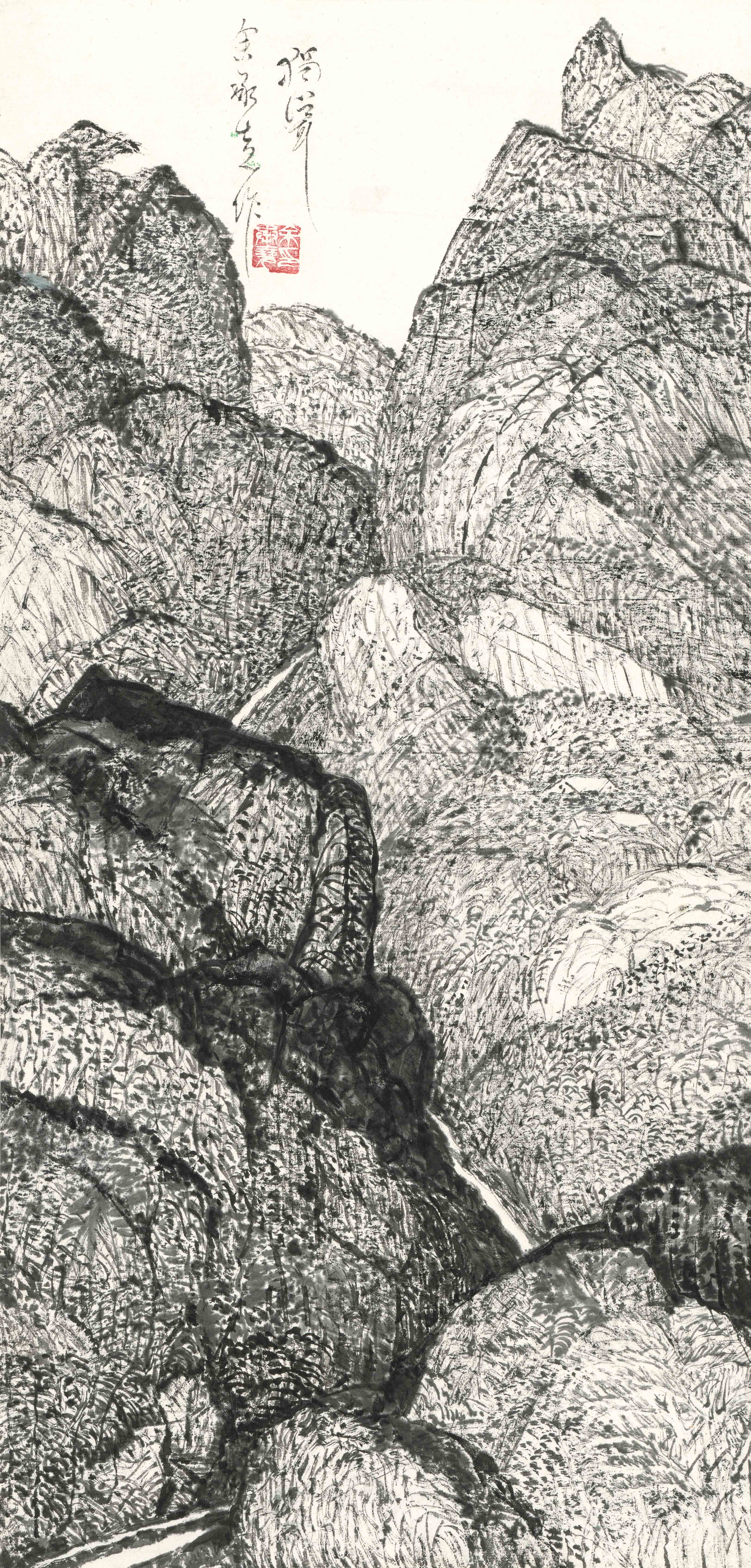
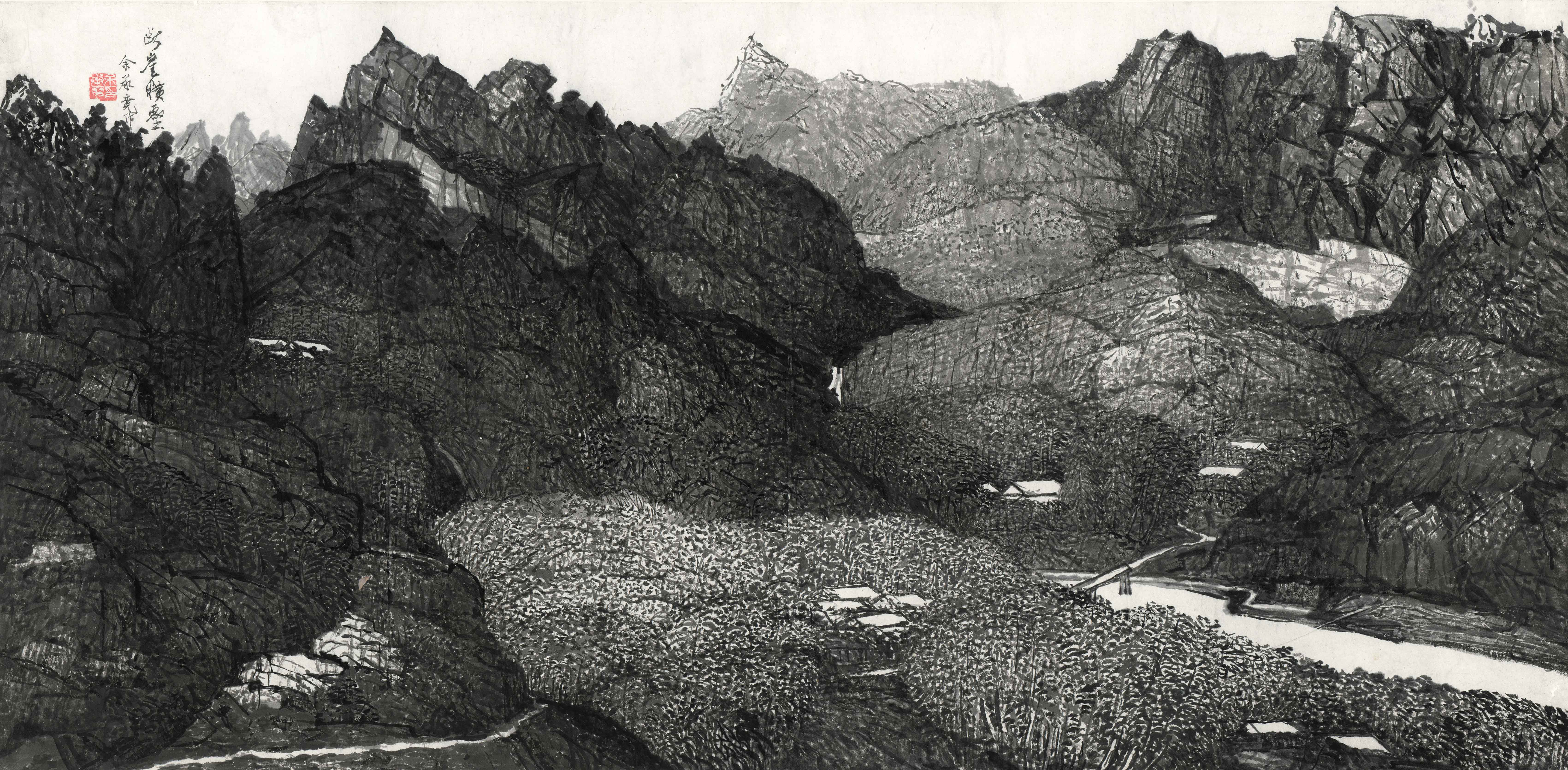
Yet Yu’s visual response to historical trauma and displacement differs sharply from the sparse, cool, and solitary landscapes associated with the Yuan painter Ni Zan. Yu filled his compositions with densely packed ranges of mountains, leaving almost no open space. Layers of fine lines, concentrated dots, and what Yu called luanbi (“unruly brushwork”) accumulate into tightly constructed rock formations.
These densely layered landscapes may be understood as spaces of retreat created in response to profound historical change and the pressures of displaced identity. Drawing from within, Yu reconstructed the mountains of memory as psychological landscapes. From the ruins of history and the longing for home, he used his own vision to build one spiritual refuge after another.
The Purity of Modernism
Within the broader history of modernism, Taiwan’s art world in the mid twentieth century was caught between inherited traditions and the growing influence of Western art. While many artists of Yu’s generation sought to modernize ink painting through encounters with Western Abstract Expressionism, Yu followed a radically different path.
Working outside institutional structures, he approached painting with remarkable directness and intuition. His emergence represents a rare form of what may be described as endogenous modernism, a modernism that developed from within his own cultural experience and personal life rather than through the adoption of an external artistic model.
At the heart of this approach was Yu’s way of placing his life within the state described in the Zhuangzi as “roaming with transformation.” During the second half of his life, listening to Nanguan music and painting the landscapes of his homeland became central forms of spiritual sustenance. His paintings were neither made to satisfy institutional expectations nor governed by established models of the past. Dense directional lines and dots overlap and accumulate across the surface. Rather than producing a static image, they create a continuous visual rhythm with an almost auditory quality, unfolding through time.
The autonomy of form and the awakening of subjective experience are central concerns of modernism. Yu departed from the classical use of traditional texture strokes as a means of describing natural forms and instead treated painting as a direct expression of an inner world. Brush and ink became a medium for the life of the mind itself. Through this intuitive approach, Yu moved beyond many of the theoretical dilemmas surrounding the modernization of ink painting. Without relying on an established modernist program, he arrived at a remarkably pure form of modern expression.
The Geometry of Luanbi
In Hills Beyond a River, James Cahill describes a formalist transformation in Yuan painting through which brushwork was increasingly freed from the representation of physical objects and acquired an independent aesthetic value.
Yu Cheng-Yao’s remarkable and forward looking achievement lies in the fact that, having never been fully trained in established painting methods, he was never bound by them. He moved beyond the increasingly codified systems of literati painting that had developed through the Ming and Qing dynasties and became a crucial figure in the transformation of traditional ink painting toward modernism.He was also among an early generation of East Asian ink painters whose modernity gained recognition in the international art world, including in New York and France.
The essence of this modernity is concentrated in what might be called the geometry of luanbi. Yu’s distinctive luanbi consists of fragmented, tightly layered, almost obsessive networks of fine lines and dense dots. Across the surface of his paintings, these marks accumulate into clusters of line and compressed fields of form, creating a sense of volume and abstract geometric structure rarely seen in traditional ink painting. Viewed at close range, these marks cease to function simply as textures describing rocks or trees. They become abstract lines in their own right.
This nearly intuitive process of geometric decomposition creates a striking resonance across time and cultures with Paul Cézanne’s exploration of the underlying geometric structure of the visible world. Both artists approached nature not simply as something to be reproduced, but as a structure to be reconstructed through the logic of painting itself. Yu thus transformed the role of traditional brush and ink within a modern visual language, pushing their formal independence to an exceptional degree. In doing so, he established a distinctly East Asian modernism capable of standing alongside the broader development of global postwar art.
A Call from the Present
At a time when the international art world and contemporary art market are reassessing Global Postwar Modernism and the contemporary significance of locally rooted artistic perspectives, Yu Cheng-Yao’s work has become more relevant than ever.
Roaming with Transformation: Yu Cheng-Yao is not simply a retrospective return to the past. It offers a contemporary reading of painting and a renewed way of seeing Yu’s work. Throughout his life, Yu remained outside formal systems and resisted established conventions. His way of “roaming with transformation” embodied a form of artistic freedom grounded in individual experience, intuition, and an uncompromising commitment to his own vision.
Today, as cultural boundaries become increasingly fluid and experiences of anxiety and displacement once again shape contemporary life, Yu’s densely layered green mountains offer more than a place of visual and psychological refuge. They also demonstrate that East Asian modernity need not be sought elsewhere. By returning to the most direct intuitions of lived experience, an artist can create a language entirely his own. Beyond countless rivers and mountains, Yu Cheng-Yao stands as a singular and unwavering peak.